Tobias Banaschewski
Medical Director of the Clinic for Child and Adolescent Psychiatry and Psychotherapy and Deputy Director of the Central Institute of Mental Health.


Professor Christine M Freitag focuses on Translational research in Neurodevelopmental, Anxiety and Disruptive Behavior Disorders in children and youth. Her methods comprise biostatistics, diagnostic and biomarker studies, randomized-controlled trials (phase-IIa, phase-III), brain stimulation and behavioural/psychotherapeutic interventions.
Thomas Frodl is a prominent neuroscientist and psychiatrist affiliated with RWTH Aachen University in Germany. His research focuses on the neurobiological underpinnings of psychiatric disorders, particularly depression and anxiety. Frodl employs advanced neuroimaging techniques to investigate brain structure and function, aiming to understand the mechanisms that contribute to these conditions. His work is instrumental in developing more effective diagnostic and therapeutic strategies, bridging the gap between clinical practice and neuroscience research.
Professor Ute Habel is a distinguished academic at RWTH Aachen University, renowned for her expertise in neuropsychology. Her research delves into the neural mechanisms of emotions, cognition, and psychiatric disorders, utilizing advanced neuroimaging techniques such as fMRI. With a prolific output of publications, she significantly contributes to the understanding of brain function in both health and disease. As a dedicated educator, she mentors students and fosters interdisciplinary collaborations, making substantial impacts on both academic research and clinical practices in neuropsychology and psychiatry.
Prof Dr Sabine C Herpertz studied human medicine in Bonn, obtained her doctorate in Frankfurt aM and habilitated in psychiatry and psychotherapy at RWTH Aachen University. Between 2002 and 2003, she held a professorship for Experimental Psychopathology at RWTH Aachen University before taking over the Chair of Psychiatry and Psychotherapy at the University of Rostock between 2003 and 2009. Since 2009, she has been Chair of General Psychiatry at Heidelberg University Hospital, Medical Director of the clinic of the same name and spokesperson for the Centre for Psychosocial Medicine. Her research focuses on the investigation of emotions and social functions in patients with personality disorders and trauma-associated disorders using experimental psychopathology and neuroscientific methods, in particular functional imaging. Reactive aggression is another focus of her research in personality disorders. She is Past President of the International Society for the Study of Personality Disorders (ISSPD) and has published many book chapters and journal articles on personality disorders. A second focus of her research is the development and evaluation of psychotherapeutic interventions.
Kerstin Konrad is affiliated with the RWTH Aachen University and Forschungszentrum Jülich, where she specializes in developmental psychology and neuroscience. Her research primarily focuses on the cognitive and neural mechanisms underlying attention and executive functions in children and adolescents. Through her work, Konrad aims to better understand developmental disorders such as ADHD, contributing valuable insights to the field of child psychology and cognitive development.
Andreas Reif is a German Psychiatrist, who received his training at the University Hospital Würzburg, where he also did his residency and later on became Vice Chair. In 2014, he took over the position of Chair of the Department of Psychiatry, Psychosomatic Medicine and Psychotherapy at the University Medical Center Frankfurt, where he is also full professor. ARs clinical and research interests include affective disorders (TRD, bipolar disorder, suicidality) and adult ADHD; his research is translational in nature and revolves around the ideas of precision psychiatry, i.e. identifying the best therapy at the exact time for a given individual patient. He has published more than 650 original papers and reviews, also in the most prestigious journals such a the New England Journal of Medicine, Lancet and Science, and has an h² index of 97. He is an internationally renowned speaker and active in several learned societies, especially the German Psychiatric Association (DGPPN), where he is an executive board member, as well as ECNP, where he is president elect. Also, he is involved in several clinical guidelines and outreach programs.
Linda Wilkin-Krug is a postdoctoral researcher at the Julius-Maximilians-University Würzburg.
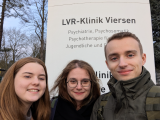
Dr. Christiane Licht(Left), a postdoctoral researcher and Christina Neczewicz (right), a doctoral student of medicine at RWTH Aachen, visited the LVR-Klinik in Viersen,Germany today. Building on the initial visit that kickstarted the research on the Q01 research project, we focused on continuing and complementing patient surveys, recruiting additional patients, and collecting biosamples for further analysis.
Today, Christina Neczewicz (left) and Joris Burger (right), doctoral research students at RWTH Aachen University, and Dr. Christiane Licht (center) had an appointment at the LVR-Klinik Viersen, recruiting additional forensic patients. We are looking forward to this coming collaboration regarding recruitment in Q01.
Psychopathy is one of the greatest risk factors for serious and persistent violence. In order to detect its neurobiological substrates, we examined 39 male psychopathic subjects and matched controls using structural MR imaging and the Psychopathy Check-List (PCL-R). Individual brain region volumes were calculated using the Julich-Brain and AAL3 atlases. Associations of region volumes with the PCL-R dimensions among psychopathic subjects and differences between both groups were analysed. PCL-R factor 2 assessing lifestyle and antisocial behaviour showed in the psychopathic sample negative associations with volumes of several regions, including pons, nuclei of basal ganglia, thalamus, basal forebrain (CH-4), cerebellar regions and areas in orbitofrontal, dorsolateral-frontal and insular cortices. These findings suggest dysfunctions in specific frontal-subcortical circuits, which are known to be relevant for behavioral control. In contrast, the interpersonal-affective PCL-R factor 1 showed only weak positive and negative associations with orbitofrontal, dorsolateral-frontal and left hippocampal areas (CA1, subiculum), among others, indicating that involved brain regions might be affected to a variable degree in different individuals. The group comparison yielded a significantly reduced total brain volume in psychopathic subjects relative to controls, while pronounced regional focuses of volume differences were found only in the right subiculum, suggesting an interindividually variable pattern of structural deviations in the brains of psychopathic subjects. In conclusion, these findings are compatible with the dimensionality of the PCL-R construct, and suggest a particulary strong association of antisocial behavior to smaller volumes in widespread subcortical-cortical brain regions.
Early life stress is associated with alterations in brain function and connectivity during affective processing, especially in the fronto-limbic pathway. However, most of the previous studies were limited to a small set of priori-selected regions and did not address the impact of stress timing on functional connectivity. Using data from a longitudinal birth cohort study (n = 161, 87 females, mean age (SD) = 32.2(0.3)), we investigated the associations between different time points of stress exposure and functional connectivity. We measured stressful life events across development using a modified version of Munich Event List and grouped into four developmental stages: prenatal/newborn (prenatal-3 months), infancy and toddlerhood (3 months-4.5 years), childhood (4.5–11 years), and adolescence (11–19 years). All participants completed an fMRI-based emotion regulation task at the age of 33 years. Task-dependent directed functional connectivity was calculated using whole-brain generalized psychophysiological interactions. The association between life stress and connectivity was investigated within a multiple regression framework. Our findings revealed distinct associations between stress exposure and task-specific functional connectivity, depending on the developmental timing of stress exposure. While prenatal and childhood stress were associated with lower connectivity between subcortex and cognitive networks, stress exposure unique to adolescence was related to higher connectivity from the salience network to the cognitive networks. These results suggest that early life stress alters the connectivity of cognitive and limbic networks, which are important for emotion processing and regulation. Future research should replicate and extend the findings regarding sensitive periods by utilizing diverse paradigms in cognitive, social, and emotional domains.